Winter Carp Fishing UK: Tactics, Rigs and Bait That Work
As an Amazon Associate we earn from qualifying purchases. This page contains affiliate links — if you buy through them, we earn a small commission at no extra cost to you.
Winter carp fishing isn’t about fancy gear or expensive baits—it’s about matching a slow, wary fish with a quiet, simple presentation. You don’t need a new rod, a £50 bag of pop-ups, or a dozen rigs to catch one. Just a reliable hair rig, a small wafter, and the patience to fish it right. That’s all most UK day-ticket and club waters need you to get started.
What Winter Actually Means for Carp
Winter isn’t just “cold weather.” Carp are cold-blooded, and when water drops below 10°C, their metabolism slows to a crawl. They stop roaming, stop chasing, and settle into the few spots on the lakebed where food is easiest to find and effort is lowest—think deeper bars, drop-offs, or the edges of weed beds. They’ll take a bait gently, and if it feels heavy, noisy, or unnatural, they’ll spit it out before you even hear the alarm. That’s why summer tactics—long casts, big pop-ups, fast retrieves—fail in January. Your job isn’t to attract attention. It’s to offer something so subtle and natural, they’ll take it without thinking. Find the holding spot first. Then keep it quiet.
The One Rig You Actually Need
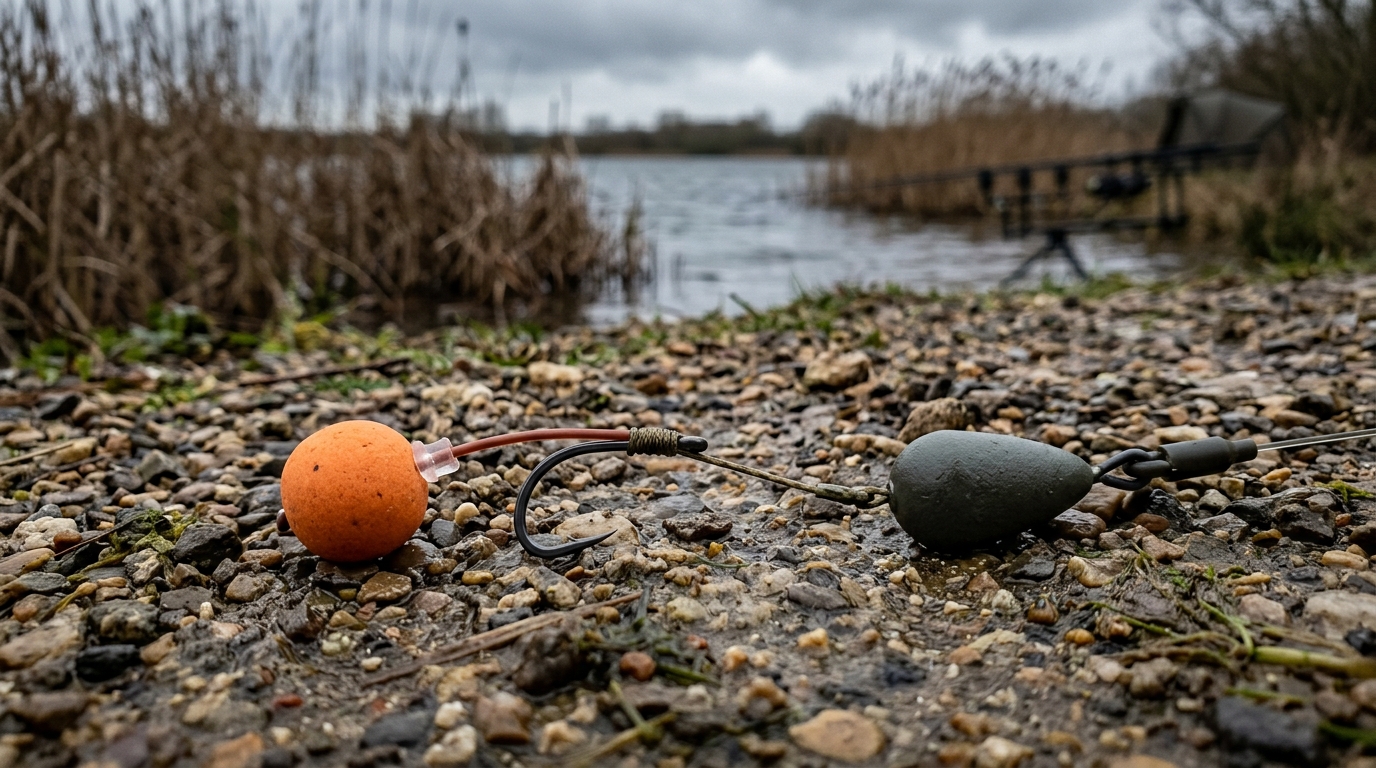
A simple hair rig with a slip-d lead clip is the only rig you need to learn for winter. Hook size 12–14, hair length 5–8mm, and a 3–5oz lead give enough weight to sit just off the bottom without dragging into snags. The slip-d lets the lead slide away if a carp pushes into weed, cutting down on lost fish dramatically. On silty club waters, a hair rig fitted with a wafter on a slip-d tends to outperform a snowman or helicopter rig — the simplicity makes it easier to fish correctly. No extra knots. No moving parts. Just a tidy, reliable setup that works in weedy, silty, or gravel-pit conditions.
The common mistake is adding a heavy hooklink and a bulky lead clip, thinking more weight means more bites. It doesn’t. It spooks fish that are already reluctant to feed. Stick to the basics. You’ll find it’s worth its salt on most UK winter venues.
How to tie a hair rig
If you need a refresher, our step-by-step guide shows exactly how to tie a hair rig, from looping the hooklink to attaching the lead-clip. The process takes under five minutes and is the same regardless of bait size. Learn how here .
Bait: Why You Don’t Need Expensive Boilies
Winter carp prefer sweet, nutty, or vanilla flavours—not spicy or fruity summer profiles. A 15mm wafter works better than a 20mm pop-up because it sits just off the bottom, looks natural, and doesn’t alarm a sluggish fish. A ready-made £12 hair rig with a wafter often outperforms a £40 “winter-specific” rig loaded with a big pop-up. The rig’s reliability matters more than the bait’s price tag.
Cheap, sweet boilies or a simple particle mix—tiger nuts, hemp, or crushed sweetcorn—will keep carp interested without costing you a fortune. A 1kg tub of decent sweet boilies runs £15–£20 and lasts a whole season. Premium pop-ups? £30–£40 for the same number of bites. The honest answer is you don’t need to spend £50 on baits to catch a winter carp.
Ready to see a budget-friendly bait list? Download the Free Beginner Carp Fishing Checklist .
Baiting Strategy: Less is More
Spodding in winter is usually a waste. The lakebed is quiet, and a PVA bag’s burst of bait can spook fish as much as it attracts them. Hand-scatter three to five key spots per swim: the deeper bar, the drop, and any weed-edge you’ve identified. Drop a handful of wafters at each—no more than a dozen per spot. Leave it alone.
Over-baiting—piling a heap of boilies in one place—can scare fish away, especially when their appetite is low. Anglers on silty venues report that hand-scattering a few wafters is more effective than spodding because it doesn’t disturb the silt or create a loud, unnatural blob of bait. Quiet wins.
Gear: What You Actually Need (and What You Don’t)
You don’t need a new rod. Your summer rod will do fine. If you do need one, the Sonik Vader X (paid link) is the sensible budget pick—reviewers say it feels lighter and higher-end than the price suggests, with a forgiving action that plays carp nicely on club waters. The Fox Horizon X (paid link) is crisp and powerful, but many buyers flag the cost as the main friction point. For a weekend angler on a tight budget, the Vader X gives solid performance without the “not cheap, but not a con either” vibe.
See Sonik Vader X price on Amazon → (paid link)
A simple bite alarm—a cheap buzzer bar or basic electronic alarm—is enough. You don’t need a full rod pod. Warm clothing, a good unhooking mat, and a reliable landing net matter far more than a high-end reel. The Shimano Baitrunner XT (paid link) is a nice upgrade if you’re looking to improve, but it’s not essential.
Check Shimano Baitrunner XT availability on Amazon → (paid link)
The common mistake is buying a heavyweight, long-range rod for winter. Most UK day-ticket waters are under 20m. A forgiving, medium-action rod like the Vader X is spot-on.
Fish Care and Legal Reminders
The Environment Agency’s rod licence rules apply year-round—no special winter permit exists. If you’re fishing in England or Wales, you must hold a valid EA rod licence, regardless of temperature. More on EA licensing here .
When you land a carp in cold water, handle it gently. Use an unhooking mat. Keep the fish in the water as long as possible. Keep its head level with the water surface. The Angling Trust’s guidelines stress quick release to minimise stress. See their full fish care advice here . If a carp looks thin or lethargic, give it extra time on the mat and consider a lighter bait next time. Responsible handling keeps you in good standing with club managers—many ban spodding in winter unless it’s a designated feeding session.
Quick Answers
Do I need a new rod for winter fishing?
No. Your summer rod is fine. If you need a replacement, the Sonik Vader X (paid link) gives reliable performance at a modest price. The Fox Horizon X (paid link) is better built but overkill for most weekend anglers.
Buy Fox Horizon X on Amazon → (paid link)
What bait should I use in winter?
A 15mm wafter on a hair rig is often better than a big pop-up. Sweet, nutty, or vanilla flavours work best when water drops below 10°C. Avoid fruity or spicy baits—they’re summer tools.
Do I need to spod in winter?
No. Hand-scatter a few wafters at three to five key spots. It’s quieter, cheaper, and more effective on most UK lakes. Spodding disturbs the silt and scares fish that are already feeding reluctantly.
What rig should I use in winter?
A basic hair rig with a slip-d or small lead-clip is the most reliable for beginners. It works in weedy, silty, and gravel-pit conditions and cuts down on snag losses. Don’t overcomplicate it.
Do I need a special rod licence for winter fishing?
No. The EA rod licence rules are unchanged. You need the same licence in winter as in summer—no exceptions. Make sure it’s valid before you leave home.
For more questions answered, see the Winter Carp Fishing Q&A Hub .
Winter Carp Fishing: Rig and Bait Reference
| Rig Type | Lead Weight | Bait Type | Best For | Common Mistake |
|---|---|---|---|---|
| Hair rig with slip-d | 3–5oz | 15mm wafter | Silty, weedy club waters | Using heavy hooklinks |
| Helicopter rig | 4–6oz | Pop-up | Deep gravel pits | Overcomplicating the setup |
| Ronnie rig | 2–4oz | Wafter | Clear, hard lakebeds | Too much movement |
| Chod rig | 5oz+ | Big pop-up | Weedy margins | Too noisy for cold water |
| Blowback rig | 3oz | Sweet boilies | Lightly silted areas | Poor hair length control |
| Simple hair rig | 3oz | Tiger nut | Low-light conditions | Using spicy flavours |
Your Next Step
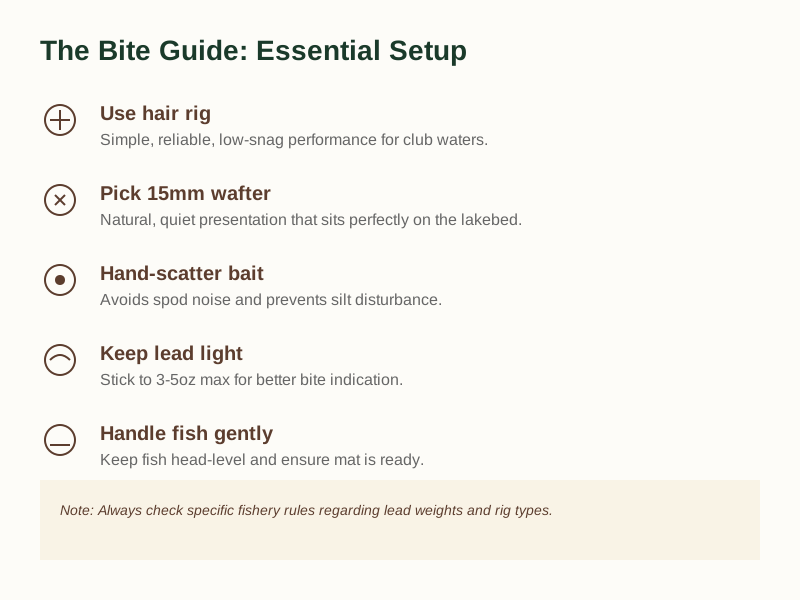
Winter carp fishing boils down to three things: a simple, reliable hair rig; a small, sweet wafter bait; and a quiet, focused bait-scattering tactic. Forget the pricey pop-ups, the complex rigs, and the idea that you need a brand-new rod. Stick to the basics, keep your presentation light, and you’ll find bites on most UK day-ticket waters.
Now you know what fair-value gear looks like and how to present it. The next logical step is to get a printable plan that ties everything together—Download the Free Beginner Carp Fishing Checklist . It walks you through rig set-up, bait selection, and a quick-scan water-reading checklist, so you can head out confident and bite-ready.
You just need to fish simply, quietly, and confidently.
About The Bite Guide Team | Get in Touch | More on the blog
Explore More Topics
Go deeper on specific topics:
- Spring Carp Fishing: Where to Find Them After Winter
- Autumn Carp Fishing: The Big Feed Window Before Winter
- How to Find Carp in a Lake: Watercraft Basics for Beginners
- Margin Fishing for Carp: A Simple Tactic for Big Catches
As an Amazon Associate we earn from qualifying purchases.