What Gear Do You Actually Need to Start Carp Fishing?
As an Amazon Associate we earn from qualifying purchases. This page contains affiliate links — if you buy through them, we earn a small commission at no extra cost to you.
You’ve seen the £200+ “starter kits” on YouTube. The truth is simpler: you can legally catch your first carp in England or Wales for less than £150. Most of it’s stuff you can borrow or already own. Forget fancy rods and multi-bait pantries. This is the bare-essentials list, backed by what UK day-ticket anglers actually use on their first trips.
The Legal Minimum — What You Can’t Skip
First, the non-negotiables. You must have a valid Environment Agency rod licence to fish for carp anywhere in England or Wales. A one-rod annual licence costs around £30, or £6 for a single day on two rods. Venues check at the gate. No licence means a fine before you’ve even cast a line.
Equally non-negotiable: an unhooking mat. The Angling Trust’s fish-care guidelines make it mandatory on nearly all club and day-ticket waters. Without one, you’re breaking the rules.
Bottom line: licence + unhooking mat = legal. Everything else is optional until you’ve caught your first carp.
The Rod and Reel — What’s Actually Essential
A 3 lb test-curve rod is enough for most UK gravel pits and day-ticket waters. Starter rod-and-reel combos from Angling Direct or local tackle shops start at around £40–£80. What matters is a smooth bait-runner or fixed-spool reel that lays line cleanly and doesn’t tangle under light tension.
The Sonik Vader X (paid link) keeps coming up in UK forum threads as a quiet winner for beginners: light, easy to control, and tough enough for a season’s worth of accidental snags. The tip’s a bit chunkier than premium rods, but on a 3 lb test curve, that’s not a flaw — it’s a feature.
See Sonik Vader X on Amazon → (paid link)
Skip the £200+ distance rods like the Fox Horizon X (paid link). You won’t cast 40 metres on a typical day-ticket pond, and when you do, it’s usually wind-driven, not skill. Save your cash for bait.
See Fox Horizon X price on Amazon → (paid link)
A common mistake is buying a stiff, heavy rod thinking it’ll help hook fish. It doesn’t. It just makes it harder to feel a subtle bite and risks pulling the hook out on a light line.
The Rig — Why a Simple Hair Rig Is All You Need
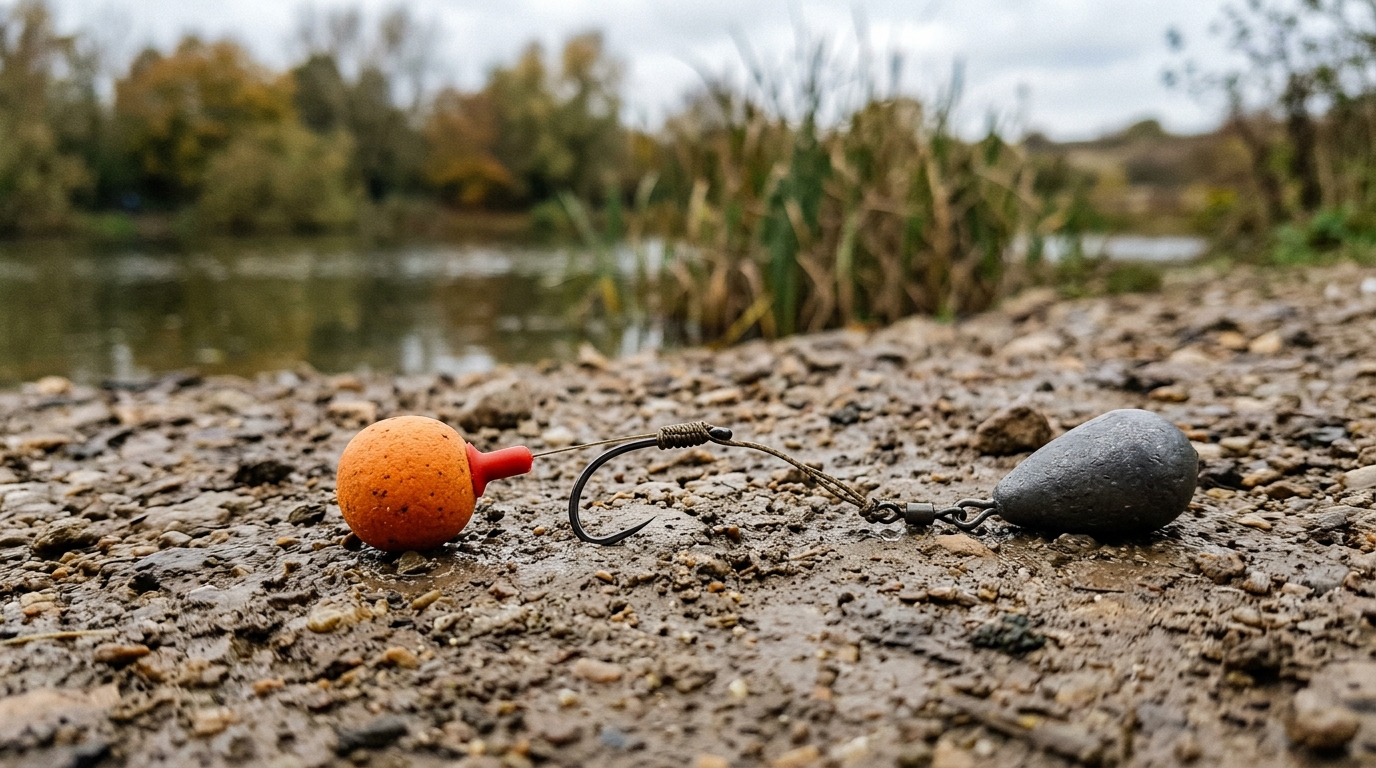
UK anglers on Carp.com and local forums say the same thing: most beginners who caught carp last year used a basic hair rig. Not a Ronnie. Not a Chod. Just a hook tied to a stiff, low-visibility hooklink with a boilie or wafter pinned on a hair.
A ready-made hair rig from Korda or ESP costs about £12 and is perfectly serviceable for your first season. The main complaint is that cheap knots can slip. Fix it by giving the knot a sharp tug before you leave. If it holds, you’re sorted.
For the hooklink, the Korda IQ (paid link) is the go-to. Anglers call it “nearly invisible” and “tough as nails” on snaggy lakebeds. It’s a bit springy, but on a basic boilie, that doesn’t matter.
View Korda IQ price on Amazon → (paid link)
Save the Ronnie and Chod rigs for when you’ve nailed the timing of the hair rig. They’re not harder to use — they’re just more fiddly, and you don’t need them yet.
Bait and Hooks — What to Put on the End of Your Line
You don’t need five different boilies. One good one is enough. Two names dominate UK day-ticket waters:
- Sticky Baits Manilla (paid link): sweet, nutty, works cold and warm. More expensive, but anglers report consistent catches even when others blank.
Check Sticky Baits Manilla availability on Amazon → (paid link)
- Mainline Cell: the budget workhorse. Not flashy, but reliable. If you’re new and don’t know what to buy, grab this.
For hooks, the ESP Raptor (paid link) is the default. Its aggressive bend sets fast on light lines, and it holds well on most carp. A few users report occasional bending on big fish — so check the hook after a snag or if you feel a heavy, sudden pull.
Find ESP Raptor on Amazon → (paid link)
If you’re fishing weedy margins, a coated-braid link like the Gardner GT N-Trap helps avoid tangles. But that’s a “next season” upgrade — not a first-timer must-have.
The Net and Mat — Fish Care and Safety
A fine-mesh landing net (1.5m+ mouth) isn’t just polite — it’s critical. Coarse mesh strips slime, stresses the fish, and increases mortality. On silty venues, where carp sink into mud, a larger net means less time out of water and less shock.
The unhooking mat? Already covered. But make sure it’s soft, non-slip, and big enough to lay the fish flat. The Angling Trust’s guidelines aren’t suggestions — they’re the standard. Skip it, and you’re not just risking a warning — you’re risking your access to the water.
What to Skip — The Expensive Clutter
You don’t need any of this on your first trip:
- £600+ bivvies, cradles, or rod racks — they add weight, cost, and hassle. You’ll be lucky to catch one carp in three hours, let alone need to manage three rods.
- High-tech bite alarms — a simple rod pod and watching the tip works fine for a 3-hour session. Save the alarms for long nights.
- Distance specialist rods over £200 — you’re not fishing a 50-acre lake with 50m margins. You’re on a pond.
- Complex rigs (Ronnie, Chod, Helicopter) — great later. For now? They’re a fair bit of faff.
- LED lights, extra clips, spod rockets — “belt and braces” gear you’ll never use.
Ready to make sure you haven’t missed anything? Download the Free Beginner Carp Fishing Checklist and tick off each item before you head to the water.
Common Questions
Do I need a rod licence for carp fishing?
Yes. An Environment Agency rod licence is legally required for all coarse fishing in England and Wales — no exceptions. A one-rod annual licence is around £30, or £6 for a single day on two rods. Buy it online before you leave.
Do I need a bite alarm on my first session?
Not at all. For a 3-hour day-ticket trip, watching your rod tip or using a simple bite indicator works perfectly. Bite alarms are useful on long night sessions or when you’re running multiple rods — but they’re noise and weight you don’t need yet.
Can I use a coarse rod for carp fishing?
Yes — and you should. A 3 lb test-curve coarse rod with a smooth bait-runner reel is the ideal starter setup. You don’t need a “carp-specific” rod until you’re regularly targeting fish over 20lb or fishing venues where you need to cast 35+ metres. Most beginners overthink this.
What is the cheapest way to start carp fishing?
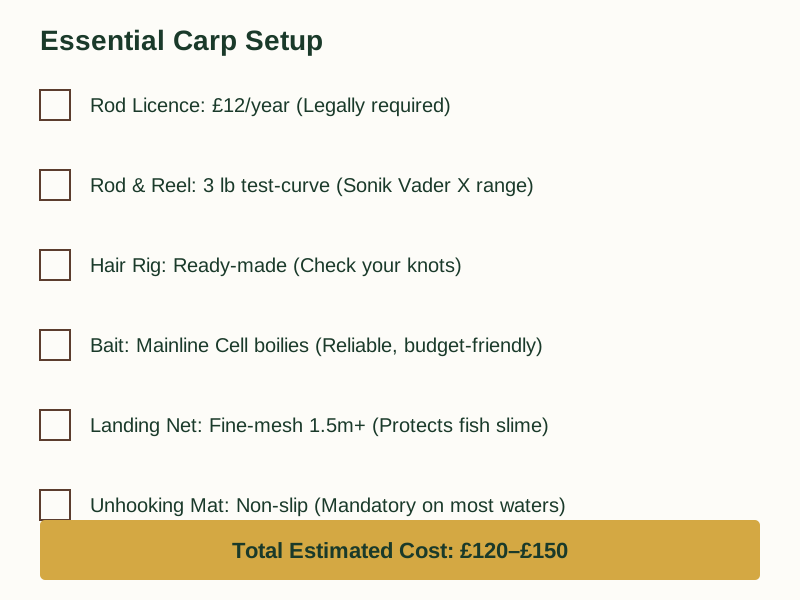
Buy a £40–£80 rod and reel combo, a £12 ready-made hair rig, one bag of Mainline Cell boilies (around £9–£12 for 1 kg), a £20 fine-mesh net, and a £5–£10 unhooking mat. Total: £120–£150. You’re legal. You’re ready. You’re not broke.
Essential Carp Fishing Gear: Beginner Cost Breakdown
| Item | Recommended Option | Approx. Cost | Notes |
|---|---|---|---|
| Rod Licence | Environment Agency | ~£30/year | Legally required before casting |
| Rod & Reel Combo | Sonik Vader X (paid link) | £40–£80 | 3 lb test-curve, smooth bait-runner |
| Hair Rig | Korda IQ (paid link) hooklink | £12 | Ready-made, check knots before use |
| Bait | Mainline Cell boilies | ~£9–£12 per kg | Reliable, budget-friendly |
| Landing Net | Fine-mesh 1.5m+ | £20 | Avoid coarse mesh — protects fish slime |
| Unhooking Mat | Basic non-slip mat | £5–£10 | Mandatory on most UK venues |
| Total | — | £120–£150 | All you need to catch your first carp |
Before You Buy
You now have a clear picture of the bare-bones kit that will get you legal, competent, and ready to catch your first carp without blowing your budget. The essentials are:
- EA rod licence
- 3 lb test-curve rod + smooth bait-runner reel (≈ £40–£80)
- Simple hair rig with a Korda IQ (paid link) hooklink (≈ £12)
- One confidence bait — Sticky Baits Manilla (paid link) or Mainline Cell (around £9–£12 per kg)
- Fine-mesh landing net (≈ £20)
- Unhooking mat (≈ £5)
Everything else — high-end rods, fancy rigs, extra gadgets — can wait until you’ve logged a few successful trips and know exactly what your favourite venues demand.
Next step: Download the Free Beginner Carp Fishing Checklist . It walks you through each piece of gear, helps you spot any missing items, and saves you from the common beginner faff of buying the wrong thing at the wrong time.
Learn how the pros think — and why simplicity wins — by reading our take on how UK carp fishing really works: About The Bite Guide Team . Got a question we didn’t cover? Get in touch .
.
Related Guides
For a complete overview, see our Carp Fishing for Beginners: The Complete UK Guide .
As an Amazon Associate we earn from qualifying purchases.