Is the Chod Rig Worth Learning as a Beginner?

As an Amazon Associate we earn from qualifying purchases. This page contains affiliate links — if you buy through them, we earn a small commission at no extra cost to you.
You don’t need a chod rig to catch your first carp. If a forum thread or a tackle shop rep is telling you otherwise, they’re selling you on faff, not fish. Most carp in UK day-ticket waters are caught on a simple hair rig. The chod is a specialist lift for when the lakebed is a mess, not a magic bullet. Here’s when it actually works, how to tie one without spending £30 on a pre-tied version, and why you should wait until you’ve landed a few carp before even thinking about it.
What the Chod Rig Actually Is
A chod rig is a short, stiff hooklink—usually coated braid—with a lead clip held just above the lakebed by a silicone sleeve. The bait, typically a pop-up, sits perched on top, not lying flat. Its only job is to present the bait clear of silt, weed, or debris that would bury a bottom bait. It doesn’t attract more bites. It doesn’t make carp hungry. It just stops the bait from sinking into the murk. Think of it as a tiny fishing elevator—not a lure. For the basics you need before this, our guide to rigs for beginners covers the essentials.
When the Chod Rig Works Best
The chod rig pulls its weight in three UK scenarios:
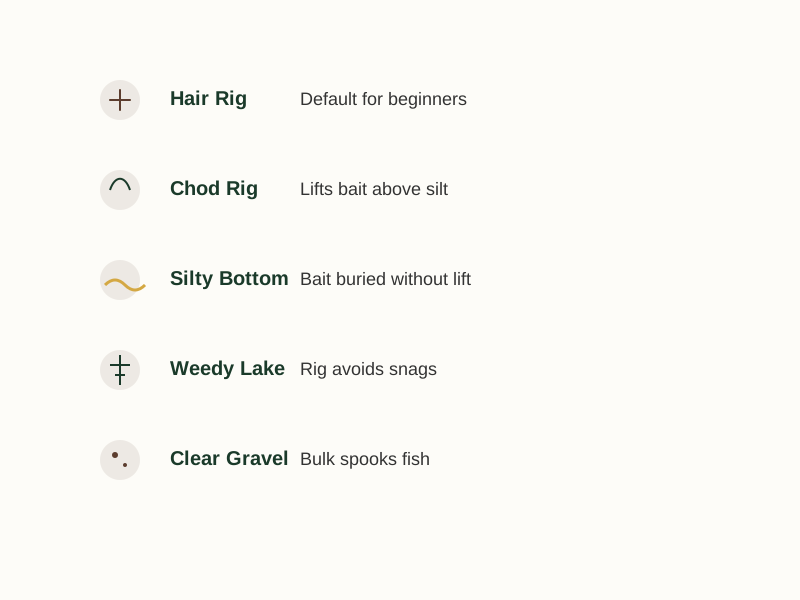
- Silty gravel pits in East Anglia, where fine mud swallows bottom baits. A 6–8 inch stiff hooklink keeps the pop-up visible and tactile.
- Weedy lakes in the Midlands, where long grass or blanket weed snags hair rigs. The lead clip lifts the bait above the tangle.
- Deep or overcast waters where carp feed slowly and rely on feel. The rigid link gives them a clear tactile cue.
Forum regulars on Carp.com consistently report that on silty pits like Foulsham, a properly tied chod can turn a blank session around—especially with a sweet pop-up like Sticky Baits Manilla (paid link). The key is keeping the link short and stiff. Anything longer than 8 inches folds, defeats the purpose, and increases hook-loss.
See Sticky Baits Manilla price on Amazon → (paid link)
When the Chod Rig Is a Waste of Time
Don’t use a chod rig if:
- You’re fishing a clear gravel pit in Yorkshire or the South West—the bait’s already visible, and the extra bulk can spook fish.
- The water’s under 1 metre deep—the lead clip hits the bottom before the link can lift.
- You’re still learning to play, land, or hook a fish—adding complexity now just increases the chance of a lost fish.
- You’re using a ready-made chod rig with a floppy hooklink—those are notorious for hook-loss because the link collapses.
The honest answer? On most beginner venues, a hair rig is simpler, more reliable, and catches more fish. Save the chod for when you’ve got a venue that’s eating your bottom baits.
How to Tie a Basic Naked Chod Rig
Tie this in under ten minutes with under £10 of kit—no tubing needed.
1. Cut the hooklink
Use 6–8 inches of coated braid like Korda Dark Matter
(paid link). Its semi-stiffness gives lift without snapping. Avoid soft fluorocarbon—it flops.
View Korda Dark Matter price on Amazon → (paid link)
2. Attach the hook
Slide a straight, wide-gape hook (ESP Raptor or Korda Longshank) onto the end. Tie a figure-8 knot. Make sure the eye faces away from the bait.
3. Fit the lead clip
Slip a 1-inch lead clip over the other end. Slide a 2mm silicone sleeve over the clip—just enough to hold it 1 inch above the hook. No tube, no fuss.
4. Tie the clip
Use a tight figure-8 or loop-to-loop knot to secure the clip. A sloppy knot twists the link and kills the rig’s action.
5. Attach the bait
Tie a pop-up boilie (Mainline Cell
(paid link) or Sticky Baits Manilla
(paid link)) with a knotless knot or small figure-8. It should sit level with the lead clip—not dangling.
Find Mainline Cell on Amazon → (paid link)
6. Test the lift
Hold the rig by the hooklink. The lead should sit 1 inch above the hook, the bait should hover just above it. If it sags, your link’s too long or too soft.
Skip the tubing until you’ve tied a dozen of these and know what “too loose” feels like. Beginners often lose more fish with tubing than without.
What Hooks, Boilies, and Hooklinks Work in UK Waters
Stick to proven combinations. You don’t need the fanciest, just the right ones.
- Hooks: ESP Raptor (strong hook-hold, quick flip) or Korda Longshank (weed-resistant, smooth cast). Both are £2–£3 for a pack of 10.
- Boilies: Mainline Cell (paid link) (all-season, firm pop-up) or Sticky Baits Manilla (paid link) (sweet-nut, works well in cold, silty water). Both are easy to find at Angling Direct or local shops.
- Hooklinks: Korda Dark Matter (paid link) (semi-stiff, weed-resistant) is the gold standard. If you’re on a budget, 6lb fluorocarbon braid works—but it’s less weed-proof and more prone to kinking.
Anglers who fish silty lakes consistently find that pairing a Raptor with Dark Matter cuts hook-loss by half in weed. The cost? Around £30–£35 for a 50m spool. It’s not cheap, but not a con either.
Common Mistakes Beginners Make
- Too long a hooklink – Over 10 inches folds in weed. Stick to 6–8 inches.
- Using soft braid or fluorocarbon – It won’t lift. The bait sinks. You get blank bites.
- Adding tubing without testing – If it’s loose, the hook swings away from the bait. Beginners lose more fish this way.
- Using it on clear gravel – Unnecessary bulk. A hair rig nails it better.
- Using the same rig everywhere – A rig that works on a silty East Anglian pit might be too stiff for a deep, weedy Midlands lake. Adjust the length and stiffness each time.
The most common gripe on forums? “My chod lost two fish in one session.” Nine times out of ten, it’s the hooklink being too long or too soft.
What UK Forum Regulars Say About Its Reliability
Across Carp.com and UK carp Facebook groups, the consensus is simple: short, stiff link = fewer lost fish. One regular in Lincolnshire wrote: “I used to run 10-inch chods. Lost half my pop-ups. Cut it to 7 inches. Catch rate doubled.” Ready-made rigs get trashed because they come with long, flexible links—engineered for marketing, not performance.
On tubing: some swear by it. Others say it reduces hook-hold. The safer play? Start naked. If you’re catching consistently and want more lift, then try a short piece of 2mm tubing. But don’t start there.
Final Verdict: Stick with a Hair Rig Until You’ve Caught 5 Carp
If you haven’t landed five carp on a basic hair rig, don’t touch a chod. Master hook-holds, playing, and bait selection first. The chod isn’t a beginner rig. It’s a troubleshooting tool for when your bottom baits vanish into the murk. Once you’re regularly fishing silty or weedy lakes—and you’ve seen your bait disappear on the camera—it’s time to try one. Until then? Keep it simple. It’s not about having the latest rig. It’s about knowing when to use it.
Ready to tighten up your basics? Download the Free Beginner Carp Fishing Checklist —it covers everything from licence rules to the one bait you should try first.
Frequently Asked Questions
Is the chod rig better than a hair rig?
No. The hair rig works everywhere. The chod only works when the bottom’s a mess. On clear gravel, a hair rig catches more fish with less faff.
Do I need tubing on a chod rig?
Not for your first try. UK anglers are split, but beginners lose more fish with tubing than without. Start naked. If you’re catching consistently and want a bit more lift, then test tubing—don’t assume it’s an upgrade.
What hooklink material should I use for a chod rig?
A short, stiff coated braid like Korda Dark Matter (paid link). Avoid soft fluorocarbon or long, floppy links. The rig needs to stand up, not flop. 6–8 inches is the sweet spot.
Can I use a chod rig on a clear gravel pit?
Don’t. The lift isn’t needed. The extra bulk and weight can spook fish. A hair rig gives a cleaner hook-hold and fewer tangles. Save the chod for silty or weedy venues.
How many carp do I need to catch before I learn the chod rig?
Wait until you’ve landed about five carp on a hair rig. That means you’ve got the basics: bait presentation, hook-hold, playing, and landing. Then, if you’re fishing venues where the bait sinks into the silt, give the chod a go. It’s a specialist tool—not a next step.
Chod Rig Suitability by UK Venue Type
| Venue Type | Bottom Condition | Chod Rig Recommended? | Why or Why Not |
|---|---|---|---|
| East Anglian gravel pit | Silty, fine mud | Yes | Keeps pop-up visible above murk |
| Midlands weedy lake | Blanket weed, long grass | Yes | Lifts bait clear of snags |
| Yorkshire clear gravel | Hard, clean bottom | No | Extra bulk spooks fish |
| Shallow pond (<1m depth) | Any | No | Lead clip hits bottom before lift |
| Deep, overcast lake | Slow-feeding, low visibility | Yes | Gives carp clear tactile cue |
| Day-ticket venue (unknown) | Unknown | No | Start with hair rig — test later |
| Overstocked commercial lake | High pressure, wary fish | No | Simplicity wins — avoid bulk |
| Winter venue (cold water) | Silted or weedy | Maybe | Only if bottom baits are buried — test with pop-up first |
Keep Learning
You now know the chod rig isn’t something you need to buy on day one. It’s a precision tool for messy bottoms, not a universal upgrade. Keep your setup simple. Nail the hair rig. Learn to read the water. When you start hitting venues where the bait disappears into the silt, you’ll know it’s time. And when that moment comes, you’ve got the tie-step, the right materials, and the warning signs to avoid the common traps.
If you’re ready to stop overcomplicating your gear and start catching more fish, download the Free Beginner Carp Fishing Checklist . It walks you through everything you actually need—from rod licence rules to the one bait that works in every UK season.
About The Bite Guide Team | Get in Touch | Browse More Guides
Related Guides
For a complete overview, see our Carp Rigs Explained: A Complete Guide for UK Anglers .
As an Amazon Associate we earn from qualifying purchases.