Carp Hooks: Which Size, Pattern and Sharpness Do You Actually Need?
As an Amazon Associate we earn from qualifying purchases. This page contains affiliate links — if you buy through them, we earn a small commission at no extra cost to you.
You’ve got a decent rod, a reel that spins smoothly, and a few dozen boilies in the bag. So why are you still staring at a rack of twenty-odd hooks, unsure which one actually belongs on your rig? The honest answer is that most beginners chase expensive, specialist patterns that don’t outperform a solid wide-gape hook on a typical UK day-ticket lake. Hook choice matters, but not in the way the glossy catalogues suggest. It’s about matching three things: the pattern, the size, and the sharpness to your lakebed and bait. Get that right and you can skip the endless tweaking.
Hook Patterns: What Actually Works on the Lakebed
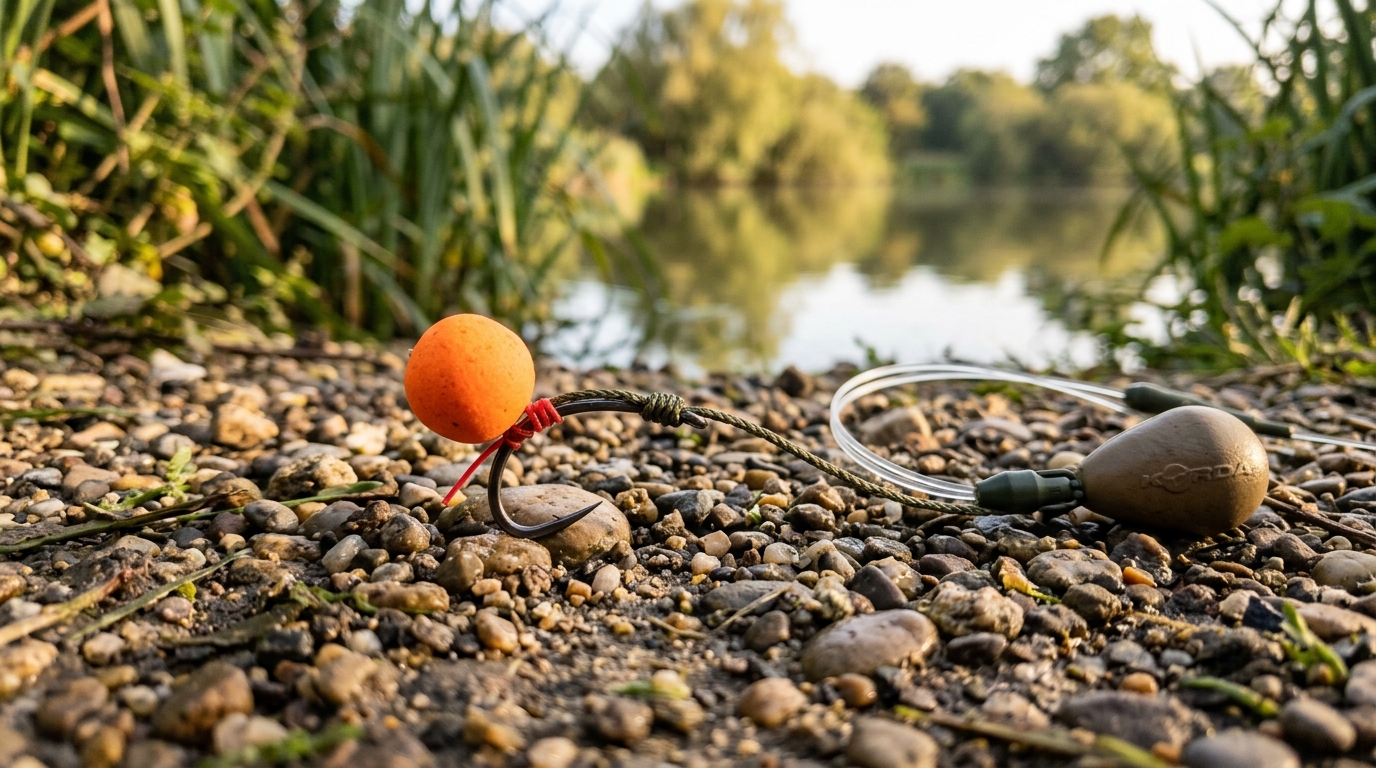
A hook’s pattern – its shape – decides how it sits in a carp’s mouth and how well it holds during the fight. For the most common UK venue, a weedy or snag-prone club pond, a wide-gape shape is the default choice. Hooks like the Korda Wide Gape (paid link) or Nash Claw (paid link) have that broad opening and a sturdy shank. This combination means they grip the lip firmly and resist bending when a fish dives through weed.
See Korda Wide Gape price on Amazon → (paid link)
Long-shank hooks add a few extra centimetres of link length. That extra reach can be useful in genuinely snaggy spots, helping to work the hook clear. On a clean gravel pit, though, the extra length adds nothing but weight and a higher chance of snagging.
Specialist barbel hooks are just that – specialist. They’re worth a look only if you’re targeting barbel on mixed fisheries; they’re not a general-purpose carp hook.
Bottom line: for most UK day-ticket waters, a barbless wide-gape hook in size 6–8 is spot on. It offers a strong hook-hold, resists bending in weedy bottoms, and works reliably with both boilies and wafters.
If you want a ready reference for rig building, check out our beginner carp rigs guide .
Hook Sizes: What “Size 6” Means on the Lakebed
Hook size is a numeric gauge of the gape and shank length, not a direct measurement. In UK carp fishing, size 4–6 is the all-round sweet spot for larger bait presentations – think big pop-ups or meaty boilies. Size 6–8 is the real workhorse for most day-ticket sessions with standard boilies and wafters. The wider gape reduces the risk of the hook pulling out, especially in silty water where a carp’s lip can be softer.
When you switch to smaller baits – corn, tiny particles, or pop-ups under 10mm – size 8–10 becomes the better choice. The finer point gives a cleaner hook-up and the smaller gape matches the bait’s profile, which improves bite detection.
Size 10–12 is useful for finesse rigs on clear, pressured waters where a subtle presentation is key. The reduced weight also helps keep the rig from sinking too fast.
Anything above size 14 is generally overkill for beginner rigs on UK waters. Those tiny hooks belong in match-fishing or on ultra-fine rigs, not on the typical boilie setups most weekend anglers use.
The honest answer is this: a size 6–8 wide-gape hook covers about 90% of the scenarios you’ll face on a UK day-ticket lake.
Need help picking the right bait for your hook size? Our carp baits for beginners guide breaks it down.
Sharpness: Do You Need to Sharpen Them?
Most hooks leave the factory sharp enough to catch straight away. A common mistake, repeated often on UK forums, is the belief that a quick file will magically improve your hook-hold. In reality, excessive sharpening removes metal, making the point weaker and more prone to bending – especially on hooks with a stiff shank like the Korda Kurv Shank.
Discussions on forums like Maggotdrowners show that anglers who routinely hone their hooks see little to no increase in catch rates, but they do report more bent hooks after a few sessions. The consensus is clear: if the hook feels blunt out of the packet, a light hone with a fine file is enough. Otherwise, leave it alone.
Coated hooks, like those with a low-visibility fluorocarbon finish, lose their coating the moment you start filing. That coating is what makes them “nearly invisible” under water, so stripping it off defeats the purpose.
Barbless hooks are now standard on many club waters due to Angling Trust guidance on fish welfare, and they’re already sharpened to a fine point. Trying to sharpen them further is a waste of time and can compromise the barbless edge, increasing the risk of accidental hook-pulls during release.
If you’re building rigs from scratch, take a look at our carp rig-tying guide for beginners for a quick refresher on handling hooklinks without over-sharpening.
What to Avoid: Overcomplication and Waste
- Specialist patterns for the sake of branding. Nash Claw (paid link), ESP Raptor (paid link) and similar “premium” hooks are excellent on aggressive rigs or in snaggy water, but they cost more and offer no real advantage on a typical day-ticket lake. Stick to a basic wide-gape hook until you know you need something else.
Find ESP Raptor on Amazon → (paid link)
- Size 14+ hooks on UK waters. They’re too small, bend easily and make hook-pulls more likely. Save them for match-fishing or ultra-fine rigs you’ll only use on specialised venues.
- Sharpening already sharp, barbless hooks. You’ll just weaken the point and, on coated hooks, strip the low-visibility finish.
- Buying “premium” packs without checking the actual hook strength. A £12 pack of 50 basic wide-gape hooks (often barbless) will out-last a £6 pack of “premium” hooks that are thinner and more prone to bending.
A starter’s kit can be assembled for around £15–£20: a pack of size 6–8 wide-gape hooks, a few barbless options for catch-and-release waters, and a simple hook-sharpening stone for the occasional genuinely dull point.
For a full rundown of essential gear, see carp gear for beginners .
Do I need to sharpen my carp hooks?
Most hooks are sharp enough straight out of the packet. Sharpening them usually makes the point weaker, not stronger. If you must, use a fine file and stop as soon as the point looks a little brighter.
What size hook should I use for a boilie?
Size 6–8 is the sweet spot for standard boilies on day-ticket waters. It offers a wide gape for a solid hook-hold without adding unnecessary weight.
What hook pattern should I use on weedy water?
Wide-gape hooks like the Korda Wide Gape (paid link) or Nash Claw (paid link) are the default. Their broad opening resists bending when the fish brushes past weeds, and they provide reliable hook-hold.
Buy Nash Claw on Amazon → (paid link)
What hook pattern should I use on silty water?
Wide-gape hooks still work best, but size 8 tends to perform better than size 6 with wafters because the larger gape reduces the chance of the hook pulling out of a softer lip.
What hook pattern should I use on gravel pits?
A standard wide-gape hook will do fine. If you’re targeting specific snaggy spots within the gravel, a long-shank hook can give you the extra reach you need.
Hook Size and Pattern Reference for UK Venues
| Venue Type | Recommended Size | Recommended Pattern | Bait Compatibility |
|---|---|---|---|
| Weedy pond | 6–8 | Wide-gape (e.g. Korda Wide Gape (paid link)) | Boilies, wafters |
| Silty lakebed | 8 | Wide-gape | Wafters, pop-ups |
| Gravel pit | 6–8 | Wide-gape | Boilies, bottom baits |
| Snaggy gravel | 6–8 | Long-shank | Boilies, method feeds |
| Clear water | 8–10 | Wide-gape | Small pop-ups, particles |
| Match fishing | 10–12 | Fine-wire | Corn, maggots |
| Barbless only | 6–8 | Wide-gape | All baits |
| Specialist use | 14+ | Barbless fine-wire | Ultra-finesse rigs |

What to Do Next
So there you have it. A wide-gape, barbless hook in the 6–8 range is the workhorse for most UK day-ticket waters. Sharpening is usually unnecessary, and specialist patterns are only worth the extra cost when you know you need them. The next step is to lock that knowledge into a practical rig set-up.
Download the Free Beginner Carp Fishing Checklist (/free-checklist/) – it walks you through the exact components you need, from hook size to bait choice, so you can head to the lake with confidence and no wasted faff.
Related Guides
For a complete overview, see our How to Set Up a Carp Rod: A Beginner’s Walkthrough .
As an Amazon Associate we earn from qualifying purchases.