Carp Fishing for Beginners: What You Actually Need to Catch Your First Fish
As an Amazon Associate we earn from qualifying purchases. This page contains affiliate links — if you buy through them, we earn a small commission at no extra cost to you.
You can get on the water for under £80 and be fully legal. The hype on YouTube makes it feel like you need a £300 rig and a secret-bait formula, but the truth is far simpler. Most carp caught on UK day-ticket lakes are taken on a basic hair rig, a couple of boilies, and a rod that cost less than your weekend pub bill. This guide cuts through the noise, tells you exactly what you need to buy, which rig actually works on most UK waters, and how to stay on the right side of the law. By the end, you’ll know the bare essentials, avoid the common faff, and have a clear next step.
The Legal Basics: Rod Licence and Fish Care
You cannot legally fish for carp in England or Wales without an Environment Agency (EA) rod licence. It’s not optional. A one-day, two-rod licence is around £6; a full year on one rod is around £30. You can buy it at any Post Office or directly through the EA’s official portal . Skipping it isn’t a ‘grey area’—it’s a criminal offence. The EA does not distinguish by species. If you’ve got a rod in the water, you need the licence.
Fish care isn’t just ethical—it’s practical. Many club waters will ban you for using a regular net or handling fish without a mat. The Angling Trust’s guidance is clear: use a knotless landing net, an unhooking mat, and keep the fish wet and supported. You don’t need fancy gear—just something to lay them on and a net that won’t tear their slime coat. More details? See our fish-welfare page.
What to Buy: The Honest Starter Kit
A solid starter kit costs £40–£80. Here’s what matters—and what you can leave on the shelf.
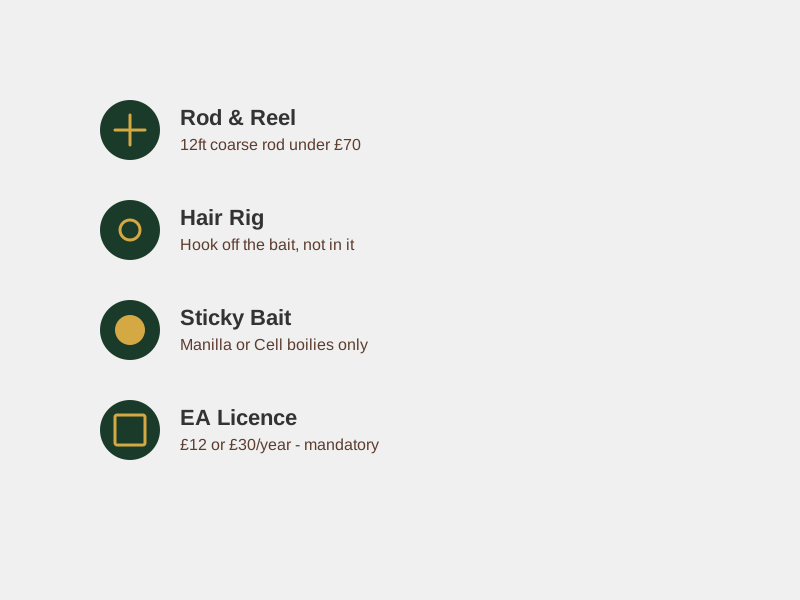
- Rod & Reel – A 12ft rod with a 2.5–3.25lb test curve, paired with a baitrunner or fixed-spool reel (3000–4000 size). High-street combos from Angling Direct or Tackle Warehouse start at £40. You don’t need carbon fibre or a fancy handle—just something that won’t snap on your first big fish.
- Terminal Tackle – Two ready-made hair rigs (£5–£8 each) or a size 8–10 hook and a small length of PVA mesh. The cheapest rigs under £10 are often poorly tied and fail in weedy swims. Better to buy one decent rig and learn to tie your own.
- Bait – A 1kg bag of Sticky Baits Manilla (paid link) or Mainline Cell (paid link) boilies (£5–£10). Add one or two pop-ups if you’re fishing in murky water. That’s it. No exotic blends, no garlic paste, no “carp magic” powder.
Find Sticky Baits Manilla on Amazon → (paid link)
- Fish-Care Kit – A knotless landing net and an unhooking mat. Both can be had for under £10 second-hand. Don’t skip these.
Skip on day one: buzzer bars, rod pods, PVA bags, spod rods, and £60 bite alarms. UK forum regulars say 8 out of 10 beginners overbuy before their first carp. Stick to the list.
Worth knowing: Most carp in the UK are caught on rigs costing less than your weekend pub bill — not the £200 setups shown on YouTube.
Ready to act? Now you know exactly what to buy – grab our free checklist to keep your budget on track: Download the Free Beginner Carp Fishing Checklist .
Stand-alone cost answer
A beginner can legally start carp fishing for under £80. That covers a 12ft rod and reel combo (£40–£70), two ready-made hair rigs (£5–£8 each), a 1kg bag of proven boilies (£5–£10), a one-day EA licence (£12), and a basic unhooking mat and landing net (£5–£10). If you buy the annual licence (£30), you’re set for the whole year. This setup ticks every legal and welfare box without a single unnecessary gadget. Most carp caught in the UK last year were taken on gear cheaper than this.
The One Rig to Tie: The Simple Hair Rig
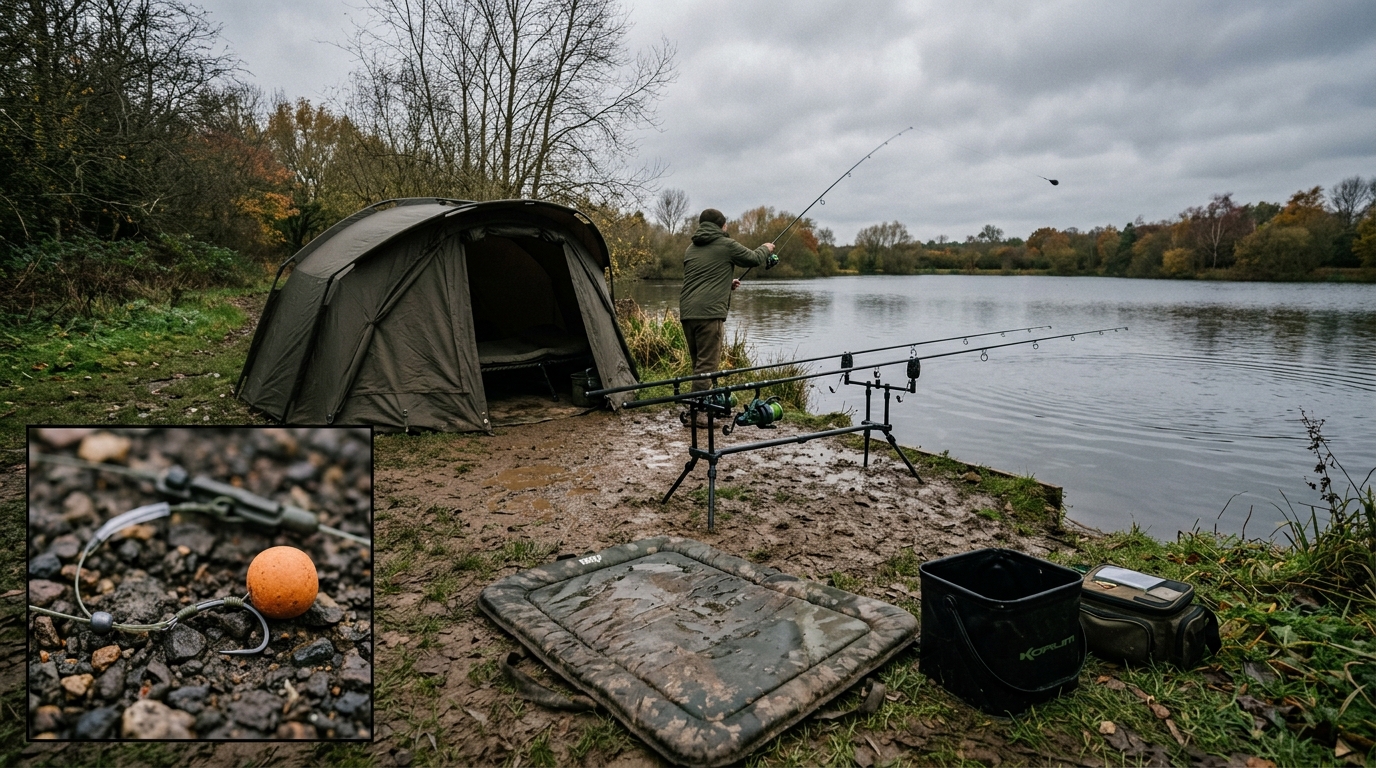
The hair rig is the reason carp fishing works for beginners. It’s not flashy. It doesn’t have a name on a YouTube channel. But it’s the rig that catches carp on silty lakes, gravel pits, and weedy margins across the UK.
Step-by-step:
- Hook – Use a size 8–10 hook. Attach a small swivel (½-inch) to the eye.
- Loop – Tie a 2–3cm loop of braid to the hook shank with a clinch knot.
- Hair – Thread a 5–10cm length of braid through the loop. Tie a tight knot at the end to secure the bait.
- Bait – Slide a 12–15mm boilie onto the hair. Push the hair back through the loop so the bait sits just off the hook point.
- Lead clip – Attach a 1–2oz lead clip to your mainline. Add a 5cm tail rubber to hold the lead in place.
Why it works: the hook is held behind the bait, not buried in it. When the carp sucks in the boilie, the hook slides free and finds the mouth. On silty bottoms, this presentation avoids the “bait pile” look that spooks fish. UK anglers consistently report it outperforms chod and helicopter rigs on unknown venues, especially when you’re just starting. Don’t overthink it. Tie this once. Fish it. Trust it.
Bait: What Works and What Doesn’t
The bait debate is mostly noise. You don’t need six flavours, three types of particles, and a spray can. Stick to two proven options.
- Sticky Baits Manilla (paid link) – Sweet, nutty, slow-releasing. It’s the bait most UK day-ticket lakes have seen a thousand times. Works in winter, spring, and early autumn. Slightly pricier, but worth it for consistency.
- Mainline Cell (paid link) – The industry standard. Widely stocked, reliable, and works in nearly every condition. If you turn up to a fishery and can’t find Manilla, Cell is your backup.
Check Mainline Cell availability on Amazon → (paid link)
- Pop-ups – Dynamite Baits Monster Squid or Mainline Pop-up. Use these only if the water’s murky or you’re fishing over thick weed. They’re not magic—just more visible. At 22p each, they’re not a budget killer, but you don’t need them on day one.
Particles like maize or tiger nuts are fine as a free offering, but don’t complicate your hookbait. “Secret mixes” and hard baits that cost £50 per kg? They’re marketing. The consensus on UK forums is clear: stick to Manilla or Cell until you’ve caught your first carp. Then you can experiment.
Venue Selection: Day-Ticket vs. Club Waters
Where you fish matters as much as what you use.
- Day-ticket lakes – No membership. Pay per session. Many have beginner zones, clear rules, and staff who’ll answer questions. These are your best entry point. You can test your rig, your bait, your patience—all without pressure.
- Club waters – Often cheaper per day, but you need to join. Many enforce rigid rules: no pop-ups, only size 10 hooks, no PVA bags. That’s fine if you’re experienced. For a beginner? It’s a distraction.
Look for these signs: clear water, visible carp activity (splashes, bubbles), and a shop or office with someone you can ask. Avoid specimen fisheries. The fees are high, the fish are wary, and the rules are designed to protect big fish—not help you learn.
For a curated list of the best day-ticket carp lakes, see our day-ticket lakes guide.
Common Beginner Mistakes
| Mistake | Correction |
|---|---|
| Overbuying gear – splurging on a rod pod, buzz-bar, or pricey spat-bag before catching a fish. | Stick to the starter kit outlined above; upgrade only after you’ve landed a carp. |
| Skipping the licence – thinking a day ticket covers it. | Purchase the EA licence first; it’s cheap and avoids fines. |
| Over-complicating rigs – jumping straight to chod or helicopter rigs. | Master the simple hair rig; it works on the majority of UK venues. |
| Casting to the centre of the lake – hoping the big fish are there. | Target the margins, weed lines, and any visible feeding zones; carp often patrol the edges. |
| Neglecting fish care – using a regular net, handling the fish too much. | Use a knot-less landing net and an unhooking mat; keep the carp wet and support its weight. |
The biggest mistake? Buying a whole “system” before the fish even see your hook. Most anglers who stick with it do so because they started simple. Trim the faff. Focus on the swim. Let the fish tell you what’s working.
Frequently Asked Questions
Do I need a carp-specific rod to catch my first carp?
No. A standard coarse rod with a 2.5–3.25lb test curve is perfectly capable. Carp under 10lb won’t break it. You don’t need a £200 carbon rod. Save that for when you’ve got a few fish under your belt.
Are those £15 ready-made rigs any good?
Some are fine. But the cheapest ones—under £10—are often poorly tied. The hook might be too close to the bait, or the hair too short. They work sometimes. But investing £5 in a size 8 hook and tying your own hair rig gives you a more reliable setup, and you’ll learn more. Plus, you’ll know how to fix it if it breaks.
Is it legal to fish for carp in the UK?
Yes—if you have a valid Environment Agency rod licence in England or Wales. No exceptions. Fishing without one is a criminal offence, and fines start at £100. The EA doesn’t care if you’re fishing for carp, tench, or perch. If you’re casting a line, you need a licence. Buy it before you leave the house.
What bait should I use for my first session?
Sticky Baits Manilla (paid link) or Mainline Cell (paid link) boilies. Both are widely available, proven on UK day-ticket lakes, and work in most conditions. A pop-up can help in murky water, but start with a boilie. Don’t overthink it. Stick with one bait type until you’ve caught your first carp.
For more questions answered, see the Carp Fishing for Beginners Q&A Hub .
Starter Kit Cost Breakdown (UK Beginner)
| Item | Recommended Option | Approx. Cost | Notes |
|---|---|---|---|
| Rod & Reel Combo | 12ft, 2.5–3.25lb test curve | £40–£70 | High-street combos from Angling Direct or Tackle Warehouse |
| Hair Rigs | 2 ready-made or 1 to tie yourself | £5–£10 | Avoid under £10 rigs — poor construction common |
| Bait | 1kg Sticky Baits Manilla (paid link) or Mainline Cell (paid link) | £5–£10 | Proven, widely available, no need for extras |
| EA Rod Licence | One-day | £12 | Annual £30 — better value if fishing more than once |
| Fish Care | Knotless net + unhooking mat | £5–£10 | Second-hand is fine; essential for venue compliance |
| Total | £65–£105 | Can start under £80 with annual licence and used gear |
Before You Buy
You now have the legal essentials, a budget-friendly kit list, a single rig that works on most UK waters, and a clear view of the bait and venues that will give you the best chance of a first catch. The next step isn’t to chase the latest YouTube gimmick—it’s to get on the water with the basics sorted and a plan in place.
Grab our free checklist to double-check you’ve covered everything before you head out: Download the Free Beginner Carp Fishing Checklist .
Enjoy the quiet of the lake, keep the fish safe, and remember that most carp are caught on simple rigs fished confidently.
About The Bite Guide Team | Get in Touch | Browse the Blog
Explore More Topics
Go deeper on specific topics:
- Do You Need a Fishing Licence for Carp in the UK?
- Carp Fishing Safety & Fish Care: A Beginner’s Guide
- What Gear Do You Actually Need to Start Carp Fishing?
- Carp Fishing on a Budget: A Complete Beginner Starter Setup
As an Amazon Associate we earn from qualifying purchases.