Why Autumn Carp Fishing Is Harder Than It Looks

As an Amazon Associate we earn from qualifying purchases. This page contains affiliate links — if you buy through them, we earn a small commission at no extra cost to you.
Autumn is supposed to be the best time to land a carp, yet you’re still coming up empty-handed. You’ve read the generic “big feed-up” promises, tried the same boilies you used in July, and even splurged on a few extra rigs – but the fish just aren’t biting. The truth isn’t that the carp have gone quiet. It’s that you’re likely overbaiting, using the wrong rig for the lakebed, or fishing at the wrong time. The window is narrow – open between 15°C and 10°C – and if you don’t match your approach to it, you’ll keep blanking. Here’s how to fix that.
The Autumn Feed: Why It’s Not a Guaranteed Feed-Up
A drop in water temperature below 15 °C is the biological cue that makes carp shift from lazy summer grazing to a more purposeful autumn feeding pattern. Shorter daylight and the scarcity of natural food push them into predictable zones – usually the edges of weed beds or the deeper pockets where organic matter settles.
UK venues react very differently once that threshold is crossed. On gravel pits, the colder water settles quickly and carp concentrate around the main feeding ditch, while weedy club waters tend to retain a thin warm layer near the surface, keeping fish higher up for longer. This nuance is echoed across dozens of Carp.com threads, where anglers repeatedly note that a “big feed-up” on a gravel lake can look like a slow, steady bite-in on a weed-heavy lake.
The honest answer is that autumn blanks aren’t caused by a mysterious lack of appetite; they’re the result of a narrow feeding window that closes as soon as water falls below 10 °C and a mismatch between bait amount, rig choice and lakebed type. Hit the right temperature trigger, keep bait modest, and use a rig that respects the bottom, and the feed-up you’ve heard about will finally materialise.
Bait Strategy: How Much Is Too Much?
Beginners often think “more is better” and dump 2–3 × the summer amount into the water. In reality, most day-ticket fisheries see a sweet spot of 4–6 large boilies (or 10–15 pellets) per rod per night during the early autumn weeks. Anything beyond that creates a “wall of food” that scares carp away and forces them to feed cautiously around the edge of the bait cloud.
A practical schedule that works on a typical Lincolnshire silt lake looks like this:
- Evening (5 pm) – lay 2 boilies on the mainline, spaced 2 m apart.
- Night (9 pm) – add 2 more on a pop-up wafter to keep the hook clear of the soft bottom.
- Morning (7 am) – drop a handful of 3 mm pellets (≈12 g) to provoke a light bite before the sun warms the surface.
Below 10 °C carp tend to feed less aggressively, so reduce the night-time add-on to just two boilies and cut the pellet count by a third.
Not sure how much bait to use? Download the Free Beginner Carp Fishing Checklist for a structured baiting plan that fits your venue’s temperature profile.
When it comes to confidence bait, many owners swear by Mainline Cell (paid link) boilies – they’re reliable but sit on the pricey side. If you need a tighter budget, the Sticky Baits Manilla (paid link) line offers a sweet nut aroma that’s proven in colder months, though it does cost a bit more per bag.
See Sticky Baits Manilla price on Amazon → (paid link)
Rig Choice: Match the Rig to the Lakebed
The bottom type you’re fishing on makes or breaks an autumn session. Here’s the split that UK anglers keep coming back to:
| Lakebed | Recommended rig | Why it works |
|---|---|---|
| Silt | Helicopter rig with a wafter or pop-up bait | Keeps the hook clear of the soft bed, prevents the rig from sinking into the mud, and lets carp hook the bait without a wall of silt. |
| Gravel | Simple hair rig with a bottom bait (size 6–8 hook) | A compact hair rig slides easily over the stone, and the bottom bait sits on the firm surface where carp are feeding. Chod rigs on gravel are often too bulky and scare fish away. |
Most forum regulars agree that Korda IQ (paid link) fluorocarbon hooklink is worth its salt for stiff, low-visibility hook-links on both setups – the hooklink stays nearly invisible and holds firmly when paired with a wide-gape hook on wafter rigs. The only consistent gripe is the extra stiffness, which can make delicate presentations feel a touch harsh. For anglers on a tighter budget, the Gardner N-Trap coated hooklink delivers comparable durability and a coated braid link, though it shares the same stiffness issue.
Find Korda IQ on Amazon → (paid link)
If you need a reel that can spot subtle autumn bites, the Shimano Baitrunner XT (paid link) is the honest choice. Reviewers love its light, smooth winding and compact size, making a long-range bait-runner feel effortless. The caveat? It’s a specialist reel, so it isn’t the all-round workhorse for heavy-duty specimen work.
See Shimano Baitrunner XT on Amazon → (paid link)
Time of Day: When to Fish the Window
Early morning (roughly 5 am – 8 am) is the most reliable bite window because water temperatures are still relatively warm from the night’s chill, and carp are most active after a night of foraging. Late afternoon (around 4 pm – 6 pm) can also produce bites, especially if a gentle breeze has stirred the surface food, but the success rate drops noticeably compared with the dawn period. Midday sessions are generally a waste of time – the water column warms just enough to make carp lethargic, and any bite you do get is often a slow hover.
A light-drag bait-runner reel lets you feel the faintest nibble in cold water. Keep the drag set to a whisper; a sudden pull is likely a carp feeding rather than a snag. If you’re using a Shimano Baitrunner XT (paid link), the smooth spool will give you that delicate feedback without the reel “spitting” the line.
What to Avoid: Beginner Traps That Cost Sessions
- Overbaiting – stacking more than 6 large boilies or 15 pellets per rod creates a food wall that spooks carp.
- Wrong rig for the lakebed – a bulky chod on gravel, or a plain hair on soft silt, will either scare the fish or bury the hook.
- Fishing at the wrong time – midday sessions on a warm day rarely produce bites; stick to early morning or late afternoon.
- Neglecting fish care – below 10 °C carp are stress-sensitive. Use a thick, insulated unhooking mat and handle them with wet hands only, as per the Angling Trust guidelines .
- Skipping the EA rod licence – the licence still applies in autumn; you’ll be fined if you’re caught without it, even on a day-ticket lake. Check your licence status here .
Quick Answers
Should I switch to pellets in autumn?
Yes. Pellets are a high-protein attractor that works well when water cools, but keep the rate modest – about 10–15 pellets per rod per night. Too many pellets create the same “wall of food” effect as over-boiling.
Do I still need an unhooking mat when it’s cold?
Absolutely. Carp become more stressed in colder water, so a thick, insulated mat helps keep them upright and reduces handling time, aligning with Angling Trust fish-care recommendations .
Is a helicopter rig still okay in autumn?
It is, but only on silt or heavily weeded lakes where you need to keep the hook clear of the bottom. On gravel pits a simple hair rig with a bottom bait is usually more effective.
Autumn Rig Recommendations by Lakebed
| Lakebed Type | Recommended Rig | Bait Type | Key Reason |
|---|---|---|---|
| Silt | Helicopter rig | Wafter or pop-up | Keeps hook clear of soft mud, prevents burying |
| Gravel | Simple hair rig | Bottom bait | Compact presentation slides over stones without spooking |
| Weedy | Helicopter or chod rig | Pop-up | Avoids snagging in vegetation, keeps bait visible |
| Mixed | Helicopter rig | Wafter | Adaptable to variable bottom conditions |
| Deep pits | Chod rig (optional) | Pop-up | Only if bottom is uneven and bait needs lifting |
| Shallow club waters | Simple hair rig | Bottom bait | Carp feed close to bed, minimal lift needed |
What to Do Next
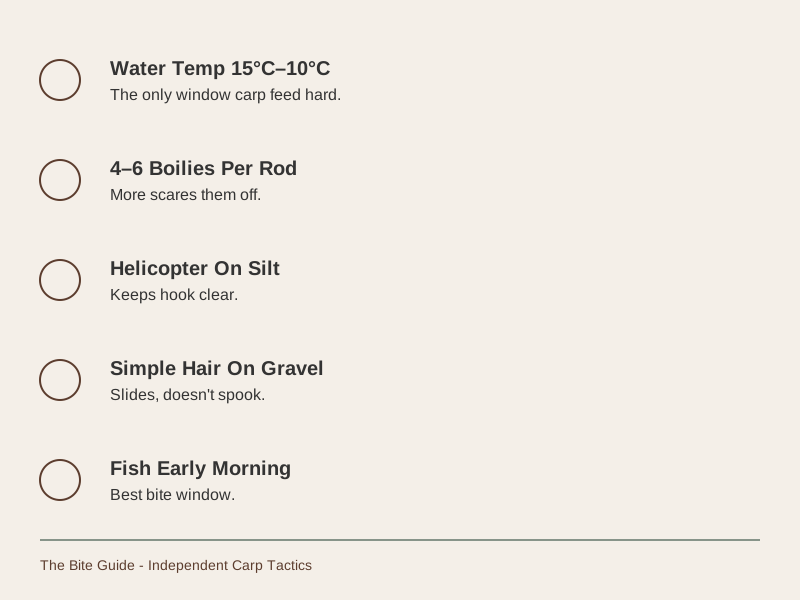
Autumn’s feeding window is narrow, and most blanks happen because anglers over-bait, use the wrong rig for the lakebed, or fish at the wrong time. Keep bait modest, match your rig to silt or gravel, and focus on early-morning sessions when the water is still cool enough to encourage activity.
Ready to lock the plan down? Download the Free Beginner Carp Fishing Checklist . It gives you exact baiting rates, rig recommendations for each lake type, and a quick fish-care cheat sheet for cold water.
Related Guides
For a complete overview, see our Winter Carp Fishing UK: Tactics, Rigs and Bait That Work .
As an Amazon Associate we earn from qualifying purchases.